1Highlight: Claude's top plan, now called Ultra, drops the five-hour limit for verified users; prices and weekly limits stay the same.
2How companies use AI: a 10-person game startup runs on an agent fleet, and a Japan survey finds only 10% of firms see clear AI results.
3Also: Notion Japan's meeting-notes-to-agents playbook, Apple Intelligence coming to China with Qwen, and Singapore's NTU signing an AI deal with Google.
Highlight of the day
AI tools
10x
Ultra's weekly usage compared with the Pro plan
Merged from 3 sources
★ Highlight of the day
Claude's top plan drops its five-hour limit for verified users
Anthropic renamed its two biggest Claude plans and removed the five-hour Session limit A cap on how much you can use an AI tool inside a short rolling window, such as five hours. When you hit it you wait for it to reset, even if you have weekly usage left. on the top one, Ultra. That limit used to stop heavy users in the middle of long jobs, even when they still had usage left for the week.
What we learned
New names, same prices: Max 5x is now just Max at about RM406 (US$100) a month, and Max 20x is now Ultra at about RM811 (US$200) a month. Subscribers don't need to do anything (Claude Help Center, The New Stack).
On Ultra, verified accounts no longer have the rolling five-hour session limit. Anthropic checks accounts automatically using account and payment history. Newer accounts keep a temporary limit and get an email when it is lifted. You can't ask for it to be sped up.
The weekly limit has not changed. Ultra gives 10 times the Pro plan's usage each week, and Max gives 5 times. Chat and Claude Code share the same pool, and both plans now include monthly API Application programming interface: a door that lets one piece of software ask another for data or actions. credits equal to their price.
Anthropic's Mike Overell apologised that the old '20x' name confused people, because it never meant 20 times the weekly usage. OpenAI had doubled its own Pro plan's usage the day before (QbitAI).
Why it matters: If you use Claude for long tasks like coding or reports, the annoying stop halfway through goes away, but the weekly cap still decides how much you really get. AI companies are now competing on Rate limit A cap on how many requests or messages you can send to an AI service in a set amount of time., not just on price.
Anthropic just removed one of Claude's biggest usage limits, but not for everyone · The New StackRead ↗
What is the Ultra plan? · Claude Help CenterRead ↗
Claude Max renamed; Ultra removes the 5-hour limit (Chinese) · QbitAIRead ↗
Was this useful?Tap to vote. Hold, right-click or press Shift+Enter to add a reason or a note first.
More stories today
How companies use AI
27
times Spawn's founder had to decide himself, out of 11,000+ AI judge calls
Merged from 3 sources
How companies use AI
A 10-person game startup lets AI agents do most of the work
Two young companies shared how they run with AI agent An AI program that takes actions for you, like writing code, paying a bill or changing a menu, not just answering questions. doing most of the day-to-day work: a game platform where agents write and fix the code, and a wealth manager where agents do the research and people make the money decisions.
Key learnings
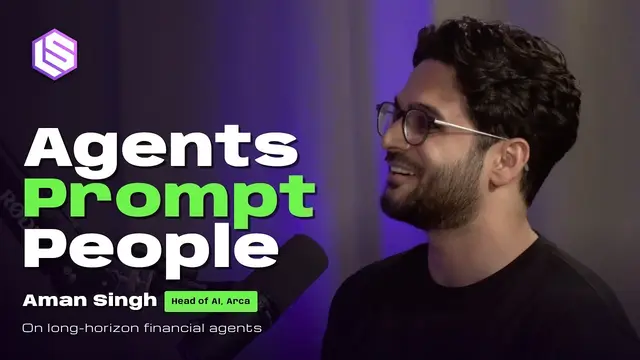
Spawn (game-making platform, US): ten people work alongside an Agent fleet A team of AI agents that stay switched on, each owning one job, like fixing bugs or handling finance, instead of being started for one task and then shut down., permanent AI agents that each have a name, a memory and their own job, like the game engine, bug triage or finance. Founder Jacob Sansbury says they shipped 77,000 substantial code changes in 30 days, about 108 an hour, and spent about RM12.6 million (US$3.1 million) on AI Token A small chunk of text, roughly part of a word, that AI models read and write. AI usage and pricing are counted in tokens. last month, about 30 times payroll. Only about 0.9% of 123,548 changes in a year had to be undone (Jacob Sansbury's post, via The AI Daily Brief and Simon Willison).
Spawn turned two years of the founder's past decisions into an AI judge An AI that makes routine decisions by following rules or past human decisions, and passes anything new or unclear to a person.. In its first 8 days it handled more than 11,000 questions: about 7,300 settled by matching an earlier human decision, about 2,200 sent back to the agent, and about 1,800 passed to a person. The founder only had to decide 27 times, and daily changes went from about 1,000 to more than 7,000. Bugs that players' own agents report get fixed automatically, which makes it close to Self-healing software Software that spots its own problems, such as errors or bug reports, and fixes them automatically, often without a person stepping in..
Arca (wealth manager, US): agents do the background research for its financial advisers. Some jobs run for up to 10 days, so each client has their own memory. People make the final calls and handle every trade and money move. Fixed Guardrail A fixed safety rule around an AI system that blocks or checks risky actions, such as stopping it from moving money without a person. check for Prompt injection A trick where hidden instructions in a web page or file make an AI do something its user did not ask for., and a Meta-agent An AI agent whose job is to improve other agents, for example by changing their instructions based on feedback. improves the setup using advisers' feedback (Latent Space).
Lesson: both give agents ongoing ownership of real work plus a shared record of what happened, while people keep taste, direction and money decisions. Spawn's numbers are its own, and its founder says big companies will find this AI-native Built around AI from the start, so AI does much of the core work, rather than AI being added to an old way of working. way of working hard to copy.
Why it matters: This is what AI-native work can look like when a company is built around agents from day one. Most firms can borrow the simpler ideas, like turning past decisions into rules and letting agents own a task end to end.
How the Most AI Pilled Company in the World Works · The AI Daily BriefWatch ↗
How I Built the Most AI-Pilled Company in the World (notes) · Simon WillisonRead ↗
Arca: the AI-native wealth manager · Latent SpaceRead ↗
Was this useful?Tap to vote. Hold, right-click or press Shift+Enter to add a reason or a note first.
AI at work
10.0%
of Japanese firms surveyed see clear results from generative AI
Merged from 3 sources
AI at work
Companies start measuring what AI actually does at work
Using AI is easy. Proving it pays off is harder. A big Japanese survey, new Claude Enterprise reports and a robot maker's new unit all try to answer the same question: what is AI really adding?
Key learnings
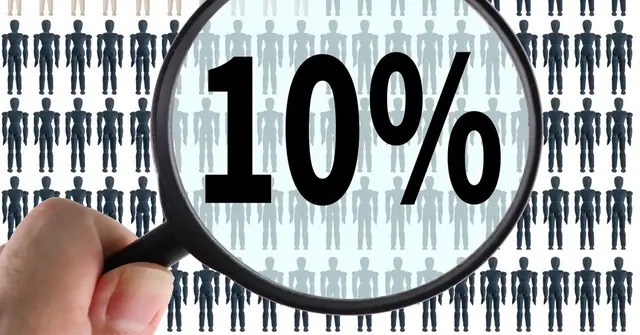
Japan survey (INDUSTRIAL-X, 1,031 people, July 2026): 60.9% of companies use generative AI, but only 10.0% say they see clear results. Most gains are time saved (72.3%) and costs cut (41.4%). Only 10.7% saw more sales (ITmedia).
What made the difference: when bosses took part, 61.2% used AI across the whole company versus 16.2% when they didn't, and 24.3% saw clear results versus 6.6%. A dedicated team and company-wide training also showed up much more often in the firms that got results.
Claude Enterprise added smart reports that show each team's work, costs, outputs and blockers, and suggest things like turning repeated work into Skill A saved, reusable set of instructions (and sometimes code) that an AI agent loads when a task needs it.. Anthropic says they are not for judging staff. It also added short in-app surveys and shared team budgets with email alerts at 50%, 75%, 95% and 100% (ITmedia).
Robots too: AgiBot proposed 'Worken', a unit for useful robot work, counted as active robots times hours working on their own times an output ratio. At one theme park in China it went from one engineer per robot to one per three, and aims for one per ten by year-end. It has not said exactly how the ratio is set (Pandaily).
Why it matters: The gap between trying AI and getting results is mostly about people and measurement, not the model. Clear numbers and leaders who join in are what move a company from testing to real gains.
Only 10% see clear results from generative AI: what separates the winners (Japanese) · ITmedia EnterpriseRead ↗
Claude Enterprise adds smart reports, surveys and pooled budgets (Japanese) · ITmedia EnterpriseRead ↗
AgiBot proposes Worken to measure robot work · PandailyRead ↗
Was this useful?Tap to vote. Hold, right-click or press Shift+Enter to add a reason or a note first.
Notion
3
steps: record meetings, save skills, add custom agents
Notion
Notion Japan shows how teams turn meeting notes into AI helpers
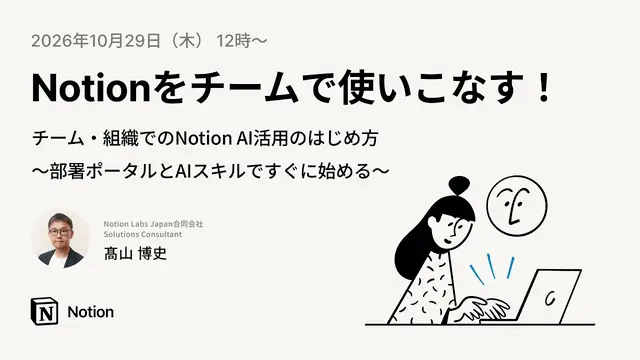
In a webinar for companies, Notion Japan walked through how a team moves from using Notion AI on its own to having AI helpers that work for the whole team, starting with meeting notes.
Key learnings
The problem: AI models are smart but don't know how your company works. Much of that is Tacit knowledge Know-how that people in a team share but rarely write down, like unwritten rules or 'how we do things here'. AI can't use it until it is recorded., things everyone 'just knows' that are never written down. Notion pitches itself as a Context layer A shared place that holds the background behind work, such as meeting notes, decisions and history, so people and AI can understand why things were done. that keeps the background and history behind finished documents.
Step 1, record: AI Meeting Notes runs in the Mac, Windows and phone apps, so it can capture online calls, meeting-room chats and seminars, and summarise a talk given in another language. The notes go into a shared team database, not someone's private folder.
Step 2, save repeat jobs as Skill A saved, reusable set of instructions (and sometimes code) that an AI agent loads when a task needs it.: for example 'make the weekly project report from this week's meeting notes'. You can ask Notion AI to write the skill for you, and the Auto model setting picks the model for each step.
Step 3, add Custom agent In Notion, an AI helper you set up to do a job on its own, often started by an event such as a meeting ending or a new database entry. that run by themselves: in the demo, when a meeting ends, one agent updates the project status and another pulls out tasks and adds them to the task list. Notion Japan named NTT Data, Mercari and NEC among large Japanese users (Notion Japan webinar).
Why it matters: The hard part of team AI is getting people to write things down and keep them up to date. Letting AI capture meetings and do the follow-up removes that chore, so the AI finally has the Context window How much text an AI can keep in mind at once, like the size of its short-term memory. it needs.
Using Notion as a team: how to start with Notion AI in teams and organisations (Japanese) · Notion JapanWatch ↗
Was this useful?Tap to vote. Hold, right-click or press Shift+Enter to add a reason or a note first.
AI in China
18
Apple Intelligence features in the first China rollout
Merged from 4 sources
AI in China
Apple Intelligence reaches China in December with Alibaba's Qwen
After two years of waiting on regulators, Apple's AI features are coming to iPhones in China, powered by Alibaba's Qwen model. Chinese labs also shared new agent and document tools.
Key learnings
Apple says the first Apple Intelligence features arrive with iOS 27.3 in December, after a Developer beta An early test version of software given to app makers before the public release, so they can try new features and fix their apps. from 4 November. About 18 features come first, including writing tools, live translation for calls and messages, and visual intelligence through the camera (South China Morning Post).
DeepSeek published a design for a 'super-agent' that stays online and runs many jobs at once. A Router talks to the person and hands out work, Workers do the jobs in separate sessions, and a Watchdog A small program that keeps checking a system and restarts or flags parts that get stuck or crash. restarts things that get stuck. It notes people can only follow 3 to 5 sessions at a time. It is a test design with a prototype on GitHub, not a product (IThome).
Xiaomi open-sourced Xiaomi-OCR Optical character recognition: software that reads words in pictures or scans and turns them into text you can edit.-0, a small 0.8-billion-parameter model that reads documents, tables and receipts and returns neat data. Xiaomi says it scores 96.83 on the OmniDocBench test, first among models under 1 billion Parameters The internal numbers a model learns during training. More parameters usually means a bigger, more capable but costlier model.. These are Xiaomi's own numbers (Pandaily).
Not confirmed: code on DeepSeek's website points to a cybersecurity model called 'Cyber' with ID checks for users. DeepSeek has not announced it (Pandaily).
Why it matters: Apple needed a local partner to sell AI features in its second-biggest market, and Qwen got the job. Chinese labs keep shipping smaller, cheaper and more practical tools that anyone can try.
Xiaomi open-sources Xiaomi-OCR-0, a 0.8B document model · PandailyRead ↗
DeepSeek website code points to Cyber, a cybersecurity model in limited testing · PandailyRead ↗
Was this useful?Tap to vote. Hold, right-click or press Shift+Enter to add a reason or a note first.
Southeast Asia
40%
of NTU undergraduate courses to include AI by 2030
Merged from 3 sources
Southeast Asia
Singapore's NTU signs AI deal with Google; Vietnam eyes China help
A top Singapore university is putting Google's AI into its teaching and research, with a focus on Southeast Asian languages, and Vietnam is talking with China about working together on AI.
Key learnings
Singapore: NTU and Google signed a Memorandum of understanding A written agreement where two groups say what they plan to work on together. It shows intent but is usually not a binding contract. (MOU), an agreement to work together, on 30 October. It covers AI across the campus, regional-language models, science research and AI safety. NTU wants AI in 40% of undergraduate courses by 2030 and will look at linking Gemini Enterprise to its NTU Learn system (TechNode Global, The Star).
With AI Singapore, they plan to collect and Open-source Software, or an AI model, whose code or files are published so anyone can use and change them. datasets that capture how Southeast Asian languages really work, and build Sovereign AI AI models and systems a country or region builds and controls itself, often trained on local languages and data. for education and healthcare on Google's open Gemma and MedGemma models.
Vietnam: at Vietnam International Digital Week, a Chinese ministry official offered joint research on large language models and open-source AI. Vietnam wants to be a leading AI centre in Southeast Asia by 2030 and among the world's top 10 by 2045 (TechNode Global).
Both are plans and promises for now, not results. No new Malaysian AI news turned up in our sources since yesterday's issue.
Why it matters: Models that understand local languages and culture matter for everyone in the region, including Malaysia. Watch for the open datasets, since those can be reused by others.
 AI tools