1Highlight: Anthropic sets an IPO price range that could value it at US$1.4 trillion; trading expected 19 Nov.
2Claude adds Meetings, Whiteboards and Sheets; Google's Gemini Robotics 2.5 sorts car parts with 96% success in a trial.
3Singapore funds 13 firms to secure AI agents; EPG tops out an RM480 million data centre module factory in Johor.
Highlight of the day
AI business
US$1.4tn
valuation at the top of the price range, fully diluted (TechCrunch)
Merged from 4 sources
★ Highlight of the day
Anthropic sets IPO price range that could value it at US$1.4 trillion
On 10 November Anthropic, the company behind Claude, launched the Roadshow A series of presentations a company gives to big investors before its shares start trading, to drum up demand. for its stock market listing. It is offering 825 million shares at US$70 to US$78 each and has applied to list on Nasdaq under the symbol 'ANT'. At the top of the range it would be worth about US$1.4 trillion on a Fully diluted valuation A company's value counting every share that could exist, including options and convertible shares, not just shares already issued., TechCrunch and CNBC report.
What we learned
The share sale could raise US$57.75 billion to US$64.35 billion (about RM234 billion to RM261 billion). Separately, AMD, Broadcom, Google, Micron, Microsoft, Nvidia and TSMC agreed to buy US$26 billion of non-voting shares at the IPO An initial public offering: the first time a private company sells its shares to anyone on a stock market. price in a Private placement Selling shares directly to a few chosen investors instead of on the open market.; Google and Nvidia are putting in US$10 billion each.
CNBC's sources say pricing is planned for 18 November and trading for 19 November, with about 20% of shares for retail investors. The Valuation How much investors think a whole company is worth. is below the US$2 trillion talked about earlier, but above the US$965 billion of Anthropic's May funding round.
The updated filing says Run-rate revenue A company's recent revenue, often one month, multiplied out to a full year. It shows pace, not money already earned. reached US$81 billion by the end of October, about US$10 billion more than a month earlier; that is the company's own figure. The founders keep control through special shares that carry 50.1% of the votes.
In the roadshow video, transcribed by developer Simon Willison, co-founder Tom Brown says Claude is trained and served on four chip families: AWS Trainium, Google TPUs, Nvidia GPU A powerful computer chip, originally for graphics, that is now the main hardware used to train and run AI. and AMD GPUs. Anthropic claims its Mythos model got Claude running on AMD chips in three days with almost no human help.
Why it matters: Nothing changes in Claude for users today. But this listing is a big test of how much investors still believe in AI, and the result could affect how easily AI companies raise money next year.
Anthropic launches roadshow for proposed initial public offering · AnthropicRead ↗
Anthropic sets IPO price range of $70 to $78 per share to reach an implied valuation of $1.404 trillion · TechCrunchRead ↗
Anthropic sets price range of $70 to $78 in upcoming IPO · CNBCRead ↗
Anthropic's IPO roadshow video · Simon Willison's WeblogRead ↗
Was this useful?Tap to vote. Hold, right-click or press Shift+Enter to add a reason or a note first.
More stories this day
AI tools
19 Nov
Claude Data switches on by default for Enterprise plans
Merged from 4 sources
AI tools
Claude can now join Google Meet calls and build shared spreadsheets
At an event in San Francisco on 10 November, Anthropic added three new tools to Claude: Meetings, Whiteboards and Sheets, all in beta. It also made Claude Data, formerly Claude Dashboards, available to all paid plans.
Key learnings
Claude Meetings is for Team and Notion Business and Enterprise Paid Notion plans for companies. Business is the plan many smaller teams buy themselves; Enterprise is a larger, sales-negotiated plan with extra admin tools for reviewing company-wide data. and works only with Google Meet at launch. Claude joins as a visible participant, posts a notice in the chat, drafts the plan being discussed and answers questions in the meeting chat. It won't join calls with outside guests unless an admin allows it, and it leaves if one joins.
Claude Whiteboards, on all paid plans, turns a messy spoken plan into a shared board with a timeline, owners and dates. It can group retro notes by theme, then turn the board into a document or slide deck, or send it to Lucid, Miro or Zoho's Vani.
Claude Sheets, also on paid plans, builds a spreadsheet with tabs, formulas and drop-downs from a prompt such as 'make a hiring budget', and outlines each edit it makes. Anthropic says the features are simple for now; you can export to Excel or CSV.
For admins: on Team plans all three are on by default. On Enterprise plans Whiteboards and Sheets start off, and Claude Data turns on by default on 19 November. Settings are under Organization settings > Artifacts.
Why it matters: If your team already pays for Claude, try Sheets or Whiteboards on a small tracker before moving real work into it. Enterprise admins should check the Artifacts settings before 19 November.
Was this useful?Tap to vote. Hold, right-click or press Shift+Enter to add a reason or a note first.
Robotics
96%
kitting success in the Mercedes-Benz trial (Google figure)
Merged from 4 sources
Robotics
Google's Gemini Robotics 2.5 helps humanoids sort car parts in factories
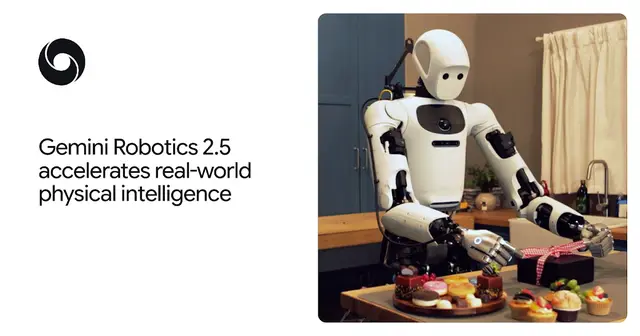
On 10 November Google DeepMind introduced Gemini Robotics 2.5, its most capable Vision-language-action model An AI model that looks through cameras, understands instructions in words and turns them into movements for a robot.: an AI that sees, follows instructions and moves a robot's arms and hands. It is rolling out to partners such as Agile Robots, Apptronik and Boston Dynamics, not to the public.
Key learnings
In a trial on Mercedes-Benz production lines in Hungary and Germany, Apptronik's Apollo 2 Humanoid robot A robot built roughly in the shape of a person, with arms, a torso and often legs or wheels. picked metal brackets from bins and placed them into trays in the order each car needs. This job is called Kitting Gathering the exact parts needed for one product into a tray or kit, in the right order, before assembly.. Google says they succeeded 96% of the time.
DeepMind tested the model on more than 200 tasks, such as serving food with tongs and using a lab pipette, and an Apollo 2 tied a ribbon bow with its five-finger hands. Ars Technica reports success rates 30% to 100% higher than the previous version, and 20% to 30% faster, in lab tests.
Google also released ASIMOV-Jailbreak A trick that gets an AI system to ignore its safety rules and do something it should refuse., an open test of tricks that try to talk a robot into unsafe actions. The data is on Hugging Face for other researchers to use.
Apptronik CEO Jeff Cardenas says the models improved dramatically after a few weeks of extra training and carried over to the Mercedes-Benz lines with very little drop-off.
Why it matters: Robots that can handle mixed parts on a real line are getting closer, which matters for Malaysia's electronics and car plants. This was still a pilot with Google's own numbers, so ask vendors for results on your own line before buying.
Gemini Robotics 2.5 accelerates real-world general dexterity · Google DeepMindRead ↗
DeepMind reveals Gemini Robotics 2.5 and open safety benchmark "ASIMOV-jailbreak" · Ars TechnicaRead ↗
Google DeepMind releases new advanced robotics AI model and next-generation gene prediction model · SiliconANGLERead ↗
Google DeepMind rolls out Gemini Robotics 2.5 to partners · Tech in AsiaRead ↗
Was this useful?Tap to vote. Hold, right-click or press Shift+Enter to add a reason or a note first.
Southeast Asia
S$5.6m
shared by 13 companies (about RM17 million)
Southeast Asia
Singapore funds 13 firms to protect AI agents from hackers
On 10 November Singapore's Cyber Security Agency (CSA) named 13 companies that will share about S$5.6 million (about RM17 million) to build tools against AI-enabled and quantum computing risks, e27 reports. It also opened a new round, CyberCall 2026.
Key learnings
Several projects protect AI agent An AI program that can take actions for you, like writing code, filling forms or moving items, not just answering questions. themselves. CloudsineAI will map how an attacker could hop from one agent to the next. Flexxon's X-PHY gateway will check traffic between agents and their tools for Prompt injection A trick where hidden instructions in a web page or file make an AI do something its user did not ask for. and Tool hijacking An attack that tricks an AI agent into misusing the apps or tools it is allowed to call.; its goal of over 95% detection is a design target, not a test result.
IdentityPlane is building one system to manage both staff and AI agent identities. StrongKeep, founded in 2025, is working with Singapore's research agency A*STAR on an AI 'CISO Chief information security officer: the person in charge of a company's cyber security.' for firms with fewer than 200 staff.
Two firms target future quantum risks: pQCee will build tools to test encryption against quantum-style attacks, and ST Engineering D'Crypt a quantum-ready encryptor for industrial control systems. CyberCall 2026 is open until 9 January 2027.
e27 notes the money is modest: split evenly it is about S$430,000 per company. The real test is whether infrastructure operators and small firms go on to buy the tools.
Why it matters: If your company is plugging AI agents into its systems, these grants show the risks regulators now worry about: attackers hopping between agents, hijacked tools and unmanaged agent accounts. Security startups in Malaysia can follow CyberCall 2026, but check the eligibility rules first.
Singapore is paying startups to secure the AI agents it is racing to deploy · e27Read ↗
Was this useful?Tap to vote. Hold, right-click or press Shift+Enter to add a reason or a note first.
Malaysia
800+
jobs planned when fully running (EPG figure)
Malaysia
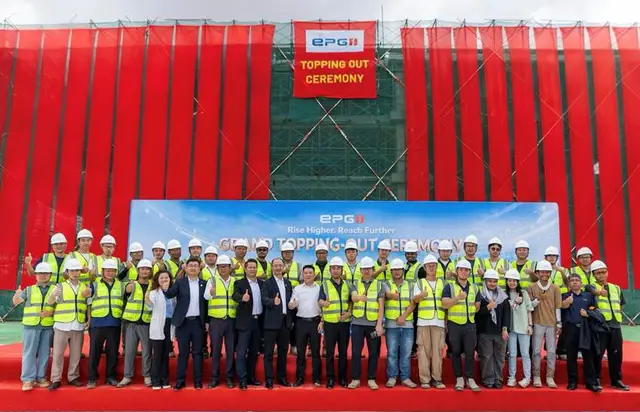
EPG tops out RM480 million data centre module factory in Johor
EPG Modular data centre A data centre built from factory-made units that are shipped and assembled on site, which can be faster than building from scratch. said on 11 November it had finished the structural frame of its S$153 million (US$119 million, about RM480 million) factory in Senai Airport City, Johor. The factory will build ready-made Data centre A large building full of computers that store data and run online services and AI, and that uses a lot of power and water. units and is due to be completed in the first quarter of 2027.
Key learnings
The site covers 107,450 square metres, including 70,000 square metres of production space, in a Free industrial zone An area where factories can import materials and export goods with fewer customs duties and paperwork. in Iskandar Malaysia. EPG says it can employ more than 800 professional and technical staff once fully running.
EPG says production lines are designed to be at least 80% automated, with automated welding, a Digital twin A live digital copy of a real machine, factory or process, used to track and test it. to track production and sensors that give real-time safety alerts. These are the company's plans, not yet in operation.
It plans to work with local suppliers of steel, electrical and mechanical systems and cables, and with Malaysian universities and training bodies on technical skills.
Modular data centres are built as factory-made units and put together on site. EPG is Singapore-based, with research centres in Singapore, Malaysia and Shanghai.
Why it matters: Johor's data centre boom, driven partly by AI demand, is bringing factory jobs as well as server halls. If you are an engineer or supplier in Johor, EPG says it will hire and buy locally once the plant opens in 2027.
 AI business