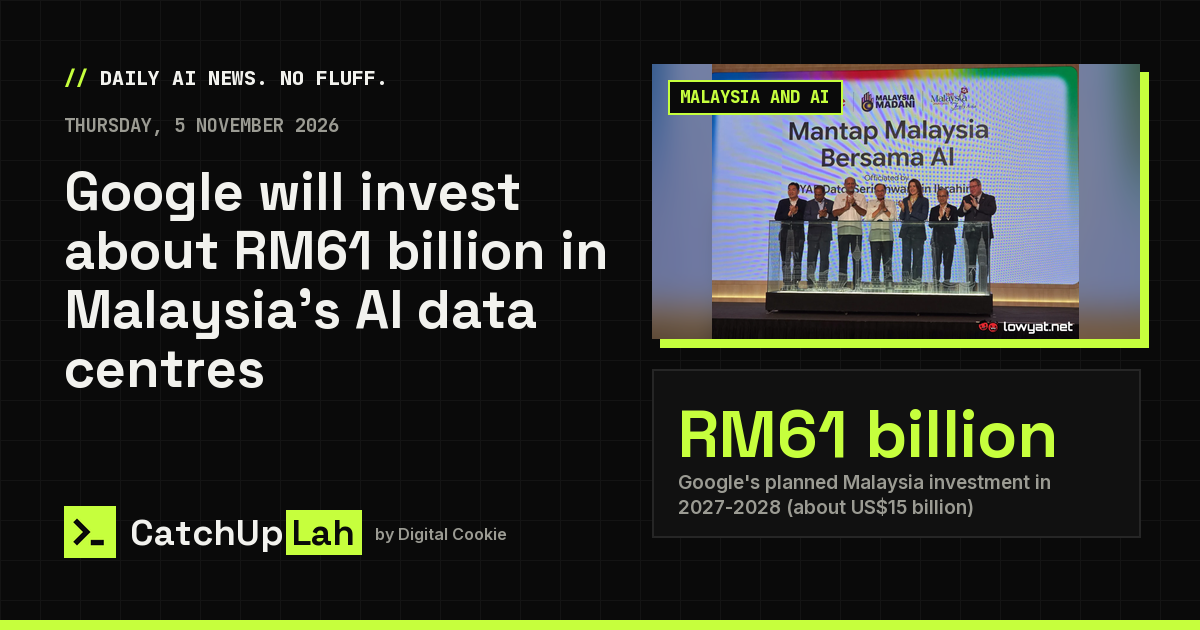
















RM61 billionGoogle's planned Malaysia investment in 2027-2028 (about US$15 billion)
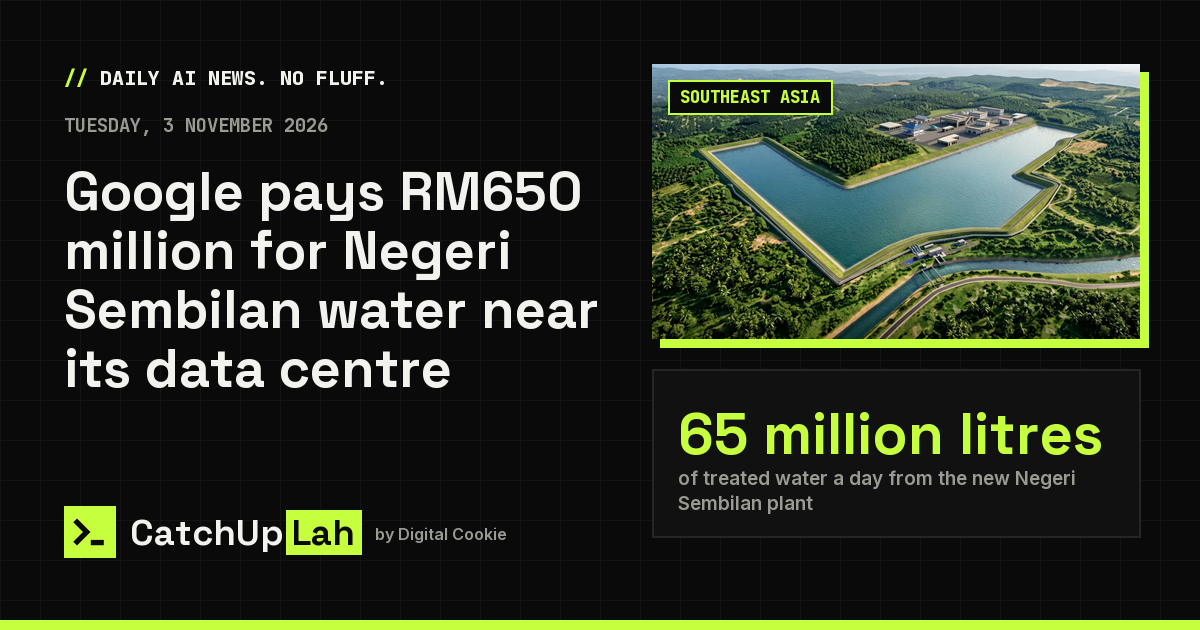
Google plans to spend about RM61 billion (US$15 billion) in Malaysia in 2027 and 2028, mostly on Data centre A large building full of computers that store data and run online services and AI, and that uses a lot of power and water. in Selangor and Negeri Sembilan. It announced the plan on 4 November with Prime Minister Anwar Ibrahim. It also promises training for 800,000 Malaysians and more clean power for the national grid.
Key points
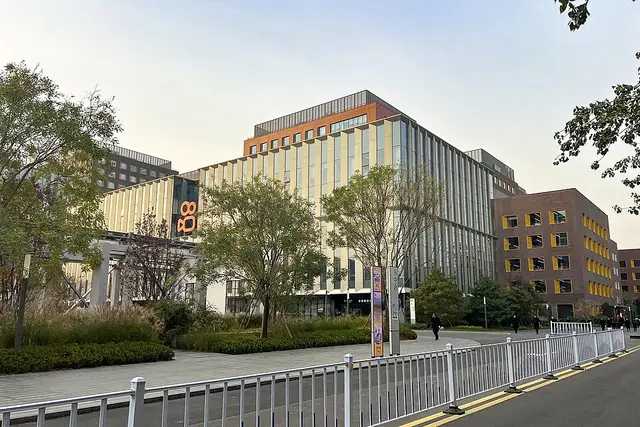
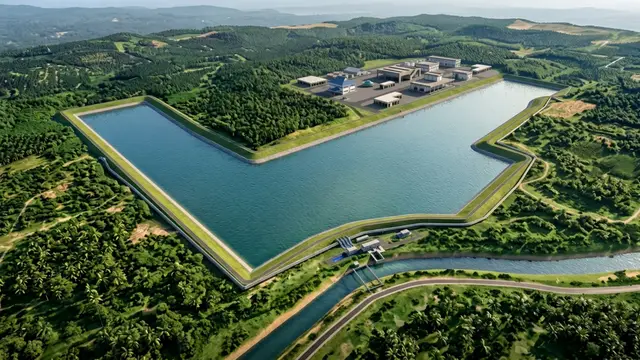
- What is being built: Google's first campus at Elmina Business Park in Selangor is already running. New campuses are planned in Selangor and in Port Dickson, Negeri Sembilan. They will also support Google's coming Cloud region A group of data centres in one area where a cloud company runs computers you can rent. in Malaysia.
- Jobs: Google expects the building work to support more than 37,000 jobs a year and add about RM4.5 billion (US$1.1 billion) a year to the economy. Once running, it says the sites will keep over 9,000 jobs that pay about 45% above the national median, with more than 80 Malaysian suppliers.
- Skill A saved, reusable set of instructions (and sometimes code) that an AI agent loads when a task needs it.: four Upskilling Training people in new skills so they can keep up as their work changes, for example with AI. programmes aim to train 800,000 Malaysians by 2031. They cover teachers and young people, small business owners, civil servants and people looking for work, starting in the host states.
- Power and water: Google says it will add more than 1 Gigawatt A measure of electric power equal to 1,000 megawatts, enough to run a large city district. of clean energy to the national grid with Tenaga Nasional, and pay for all the power its sites use. It is also funding river work in the Sungai Selangor basin and water tanks at four Selangor schools that can give 2,000 people water for up to two weeks.
Why it matters: This is one of the biggest tech investments in Malaysia this year. The jobs and training numbers are Google's own estimates, so it is worth watching whether the training reaches people beyond the host states.
Sources (2)
Was this useful?
Tap to vote. Hold, right-click or press Shift+Enter to add a reason or a note first.