1Highlight: Anthropic releases Claude Fable 5.2, its top model for hard technical work.
2SoftBank and Grab plan US$1.85bn first step for Malaysia AI data centres.
3OpenAI's AI agents found 948 ways to get root on Linux for about US$1.2m.
4Nvidia opens a board investigation after CEO Jensen Huang admits an affair with an alleged Chinese spy.
5Benchmarks are Anthropic's own; Malaysia money is staged; Linux figures are OpenAI's; spy claims are U.S. intelligence as reported by major outlets, not a court finding.
Highlight of the day
AI models
US$8 / US$40
per million input / output tokens (Anthropic list price)
Merged from 5 sources
★ Highlight of the day
Anthropic releases Claude Fable 5.2, its top model for hard technical work
On 9 November (US time) Anthropic released Claude Fable 5.2 and a restricted sibling, Mythos 5.2. Anthropic says Fable 5.2 is available on all its platforms, including Amazon Bedrock An Amazon Web Services product that lets companies use many different AI models, and build AI agents, through one service., at US$8 per million input Token A small chunk of text, roughly part of a word, that AI models read and write; AI usage and pricing are counted in tokens. and US$40 per million output tokens. Most performance figures below are Anthropic's own.
What we learned
Anthropic's own Benchmark A standard test used to compare AI models, like an exam everyone takes so scores can be compared. table puts Fable 5.2 ahead of its everyday model, Opus 5.5, on most tests, for example 69.9% vs 62.3% on the FrontierSWE v2 coding test. These are company-run tests; we found no independent results yet.
Anthropic itself still recommends starting with Opus 5.5 for most coding and knowledge work, and moving up to Fable only for the hardest open-ended jobs. Fable blocks most cybersecurity and research-biology tasks; those requests are answered by older models instead. Mythos 5.2 is only for approved cyber and life-sciences programmes.
Entrepreneurship professor Ethan Mollick, who tested it before launch and says he takes no money from AI labs, found it impressive at coding, research and business planning. But he says it did not notice problems in its own work, and he would not let it contact real customers unsupervised.
What hands-on testers found (reviewers' impressions, not benchmarks): Claire Vo on How I AI (https://www.youtube.com/watch?v=1gYQc4CL_oo) said Fable 5.2 felt fast and creative and much less annoying to work with than earlier Fable, but weak at web and front-end design taste when left alone. Peter Yang (https://www.youtube.com/watch?v=SsSKJA0EHD4) ran five real-use tests against Opus 5.5 and also found Fable stronger on polish for video, games and bold redesigns, yet Opus still held its ground better when he pushed back hard. Both still treat Opus as the everyday default for many tasks.
For businesses: Fable 5.2 is a 'Covered Model'. Anthropic says other customers' data is kept up to 30 days for safety monitoring unless an eligible enterprise uses Zero data retention An arrangement where an AI provider does not store your prompts and answers after replying, usually offered only to eligible business customers.; AWS says Bedrock use includes human safety Code review Checking code someone (or an AI) wrote before it goes live, to catch bugs and risky changes.. Paid plans that include Fable get one to three extra Fable usage resets at launch.
Why it matters: If you already pay for Claude, the launch resets are a cheap chance to try Fable on one genuinely hard task and compare it with Opus 5.5. Before sending business data, check the retention terms with your administrator.
Introducing Claude Fable 5.2 and Claude Mythos 5.2 · AnthropicRead ↗
Introducing Claude Fable 5.2 on AWS · AWS Machine Learning BlogRead ↗
Fable 5.2 and Jagged AGI · One Useful Thing (Ethan Mollick)Read ↗
Claude Fable 5.2 review: fast, creative, and finally not annoying · How I AIWatch ↗
I Tested Fable 5.2 vs Opus 5.5 on 5 Real Use Cases · Peter YangWatch ↗
Was this useful?Tap to vote. Hold, right-click or press Shift+Enter to add a reason or a note first.
More stories this day
Malaysia
US$1.85bn
initial seed capital, released in stages (SoftBank/Grab)
Merged from 5 sources
Malaysia
SoftBank and Grab plan US$1.85bn first step for Malaysia AI data centres
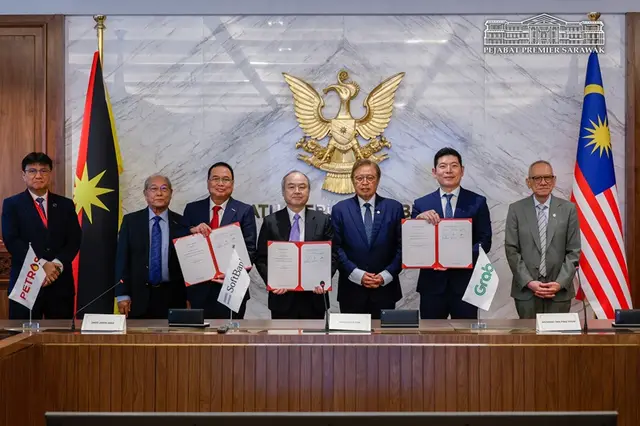
On 9 November SoftBank Group and Grab, with Sarawak's state energy company PETROS, signed joint development agreements for US$1.85 billion (about RM7.5 billion) in initial seed capital for AI Data centre A large building full of computers that store data and run online services and AI, and that uses a lot of power and water. in Sarawak and Peninsular Malaysia. SoftBank says the money will be released in stages, as projects reach development and customer-contract milestones.
Key learnings
Sarawak: US$1 billion, with SoftBank putting in US$800 million and Grab and PETROS US$100 million each; SoftBank leads and will hold the majority. Peninsular Malaysia: US$850 million, mostly from Grab (US$650 million) with SoftBank adding US$200 million; Grab leads.
The long-term goal is 5 Gigawatt A measure of electric power equal to 1,000 megawatts, enough to run a large city district. or more of AI computing capacity. That is a target, not a funded plan: the partners are still seeking more investors and Hyperscaler A very large cloud company, such as Amazon Web Services, Microsoft or Google, that rents computing power to businesses worldwide. customers, and investment terms still depend on final agreements.
The deal builds on a non-binding framework signed in Kuching on 8 October (pictured). The companies say the sites will follow Malaysia's renewable-energy guidelines and use designs that cut water use and reliance on local grids, but no site sizes, dates or water figures were given.
Why it matters: More AI computing in Malaysia could eventually mean faster, locally hosted AI services and local jobs, but nothing is built yet. Watch for named customers and power and water details before treating this as more than a staged funding pledge.
SoftBank Group, Grab and PETROS sign Joint Development Agreement for AI infrastructure in Sarawak · SoftBank GroupRead ↗
SoftBank Group and Grab sign agreements to develop AI infrastructure across Malaysia · SoftBank GroupRead ↗
Grab Holdings Form 6-K: Joint Development Agreements for AI infrastructure in Malaysia · Grab Holdings (SEC filing)Read ↗
SoftBank, Grab, PETROS sign JDAs for AI data centres in Malaysia · The Edge MalaysiaRead ↗
Sarawak lays groundwork for new AI economy with SoftBank, Grab, PETROS (8 Oct framework signing; photo: Pejabat Premier Sarawak) · DayakDailyRead ↗
Was this useful?Tap to vote. Hold, right-click or press Shift+Enter to add a reason or a note first.
AI security
948
unique Linux root findings at US$1.21m API cost (OpenAI, mid-Oct 2026 run)
Merged from 2 sources
AI security
OpenAI's AI agents found 948 ways to get root on Linux for about US$1.2m
On 4 November OpenAI published research on an automated pipeline that finds Linux security flaws, checks whether they can be used to gain full control of a machine, and drafts Patch A small software update that fixes a bug or closes a security hole. for human Code review Checking code someone (or an AI) wrote before it goes live, to catch bugs and risky changes.. In a mid-October run it produced 948 distinct local Privilege escalation A bug that lets someone gain higher computer access than they are supposed to have. (Root access Full control of a computer, able to read, change or delete anything on it.) findings at an API Application programming interface: a door that lets one piece of software ask another for data or actions. cost of US$1,213,430. A Fireship video on 10 November summarised the same OpenAI post for a general audience.
Key learnings
OpenAI's own report: scout AI agent An AI program that can take actions for you, like writing code, filling forms or moving items, not just answering questions. narrowed the Linux kernel to about 7% of the code that low-privilege users can reach; analyst agents then listed 2,308 candidate bugs; Incident triage The first step after something breaks: working out what went wrong, how serious it is and who should fix it. agents reproduced 1,724 of them in isolated Virtual machine A pretend computer running inside a real one, so software inside it is kept separate from the real machine.; Exploit A way to use a software bug to make a system do something it shouldn't, like let a stranger in. agents built working root exploits; the team counted 948 unique flaws by the distinct patches produced. The average API cost was about US$1,279 per unique root finding.
Human security researchers reviewed the exploits and patches before reports went to Linux maintainers. OpenAI says it has already sent hundreds of reports and patches for critical issues and is working with partners on the rest. Technical details of new attack methods were withheld.
A practical warning from OpenAI: for a well-resourced attacker, a low-privilege account on an Operating system The main software that runs a computer or robot and lets other programs work on it. that is not up to date should be treated as almost equivalent to full (root) access. It also recommends layered defences such as Sandbox A walled-off space on a computer where an AI or program can run without touching anything outside it. (for example Firecracker or gVisor), not only patching.
The cyber model used is not a public product you can buy. OpenAI's July run with an earlier model found 166 unique root findings; the mid-October run found more than five times as many despite months of kernel hardening. Treat the dollar figures and Bug bounty A reward a company pays to outside researchers who find and privately report security holes in its products. comparisons as OpenAI's own accounting, not an independent audit.
Why it matters: If you run Linux servers or devices, the usable takeaway is to keep them patched and not rely on a "low privilege" account alone. The research is OpenAI reporting its own pipeline; it does not mean every home PC is suddenly about to be taken over.
OpenAI spent $1.2 million hacking Linux... and it was a bargain · FireshipWatch ↗
Was this useful?Tap to vote. Hold, right-click or press Shift+Enter to add a reason or a note first.
AI industry
Board probe
Huang remains CEO while Nvidia investigates (company, 9 Nov 2026)
Merged from 4 sources
AI industry
Nvidia opens investigation after CEO Jensen Huang admits affair with alleged Chinese spy
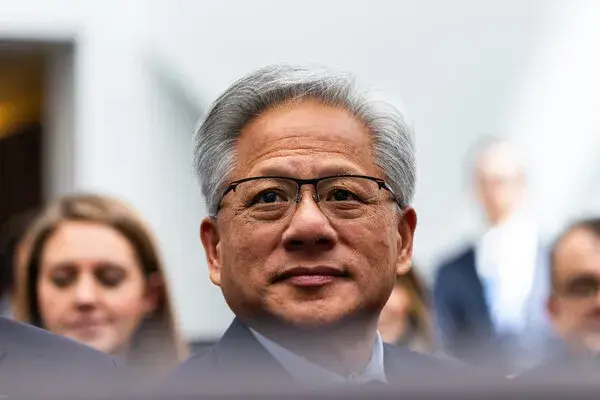
On 9 November (US time) Nvidia said its board had opened an independent investigation into chief executive Jensen Huang after he told the board he had been intimate with a Chinese businesswoman whom U.S. intelligence assessed as a spy for Beijing. Huang stays CEO during the Code review Checking code someone (or an AI) wrote before it goes live, to catch bugs and risky changes.. The New York Times, AP and BBC reported the board announcement and Huang's apology; China rejects the spying claims.
Key learnings
Nvidia's board said it has "no reason to believe that either national security or Nvidia secrets were compromised," but will examine all available information. Huang said he fully supports the review. Company spokesman John Rizzo said Huang will keep leading without interruption.
In a message to staff, Huang apologised: he was unfaithful to his wife and there was "no excuse". The woman is identified in reporting as Alice Huang (also Huang Le), a Chinese citizen and former Megaspeed data-centre executive; she is not related to Jensen Huang. U.S. officials reportedly assessed she was recruited by China's Ministry of State Security to gather information on him and AI chips.
Megaspeed, a Singapore-based firm, has been a large Nvidia chip customer in Southeast Asia. The Times previously reported Commerce Department interest in whether it helped divert restricted AI chips to China; Nvidia has said it investigated and found nothing improper, while BBC reporting says Singapore is looking into earlier sanction-circumvention allegations. What intelligence, if any, was passed remains unclear in public reporting.
Why it matters for AI: Nvidia's chips sit at the centre of U.S.–China AI competition and U.S. Export control Government rules that limit which goods can be sent to which countries.. Huang has lobbied for more China sales. Treat the spy assessment as U.S. intelligence claims reported by major outlets, not a court finding; China's Foreign Ministry called the allegations groundless.
Why it matters: If you follow AI chip supply or Malaysia data-centre deals that depend on Nvidia hardware, this is a governance and geopolitics story, not a product launch. Watch for the board's findings and any change to export-control policy—not gossip.
 AI models