1Highlight: OpenAI, Google and Microsoft back one shared robots.txt switch that lets websites say no to AI training.
2How companies use AI: Li Ning runs about 50 AI agents doing 460,000 hours of work a year, and Google Labs swaps long specs for prototypes.
3Also: Malaysia's JurisTech takes AI lending to Thailand, a fixed ChatGPT link bug, and China's AI use overtaking training.
Highlight of the day
AI and the web
1 line
in robots.txt to say no to AI training, once supported
Merged from 2 sources
★ Highlight of the day
OpenAI, Google and Microsoft back one 'don't train on my site' switch
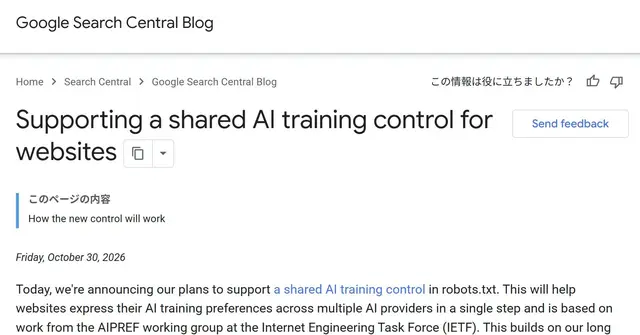
Websites may soon get one simple way to tell every big AI company not to use their pages to train AI. OpenAI, Google and Microsoft said on 30 October that they will support a shared signal, and Anthropic is already building it in.
What we learned
How it works: a site owner adds a short rule to robots.txt A small text file on a website that tells automatic visitors, like search engine and AI crawlers, which pages they may or may not use., the file that already tells Web crawler A program that visits web pages automatically and saves what it finds, for search engines or for training AI. where they can go. A new line, User-Agent: __usage_ai-training, followed by Disallow means 'don't train on this', and Allow means training is fine. You can also mix them, for example blocking the whole site but allowing a press kit folder (ITmedia, IThome).
It only covers training. It does not stop crawlers from visiting or search engines from showing your pages. If a site adds nothing, that counts as no stated preference, not a yes or a no.
Timing differs. Anthropic is first. OpenAI aims for the next few months, Google and the others aim for 2027, and Microsoft says it will start reading the signal on 1 February 2027. Google will also treat a 'don't train' signal as a no for its own Google-Extended setting unless a site says otherwise. Meta said it supports the idea but gave no plan.
It is still a proposal. The idea comes from an Internet-Draft An early, public proposal for how something on the internet should work. Anyone can write one, and it has no official standing until a standards group approves it. written by Anthropic's Kevin Kelley, which has no official standards status yet. Google says the switch also fits the EU AI Act's code of practice, which treats robots.txt as a machine-readable way to say no.
Why it matters: Today every AI company has its own Opt-out A way to say no to something that would otherwise happen by default, like having your website used to train AI., so site owners have to chase each one. One shared switch would make saying no to AI training a single line, if the companies follow through.
OpenAI, Google and Microsoft back a shared AI-training opt-out signal (Japanese) · ITmediaRead ↗
AI companies agree on a common robots.txt training signal (Chinese) · IThomeRead ↗
Was this useful?Tap to vote. Hold, right-click or press Shift+Enter to add a reason or a note first.
More stories today
How companies use AI
460,000
hours of equivalent work a year from Li Ning's AI agents
Merged from 2 sources
How companies use AI
Li Ning runs 50 AI agents as Google Labs rethinks planning
A Chinese sportswear brand shared how much work its AI agent An AI program that takes actions for you, like writing code, paying a bill or changing a menu, not just answering questions. now do, and a Google Labs product leader explained how her team decides what to build now that building is the easy part.
Key learnings
Li Ning (sportswear, China): about 50 AI agents now work in its supply chain and merchandise teams on WorkBuddy, Tencent's office agent. Together they do about 460,000 hours of equivalent work a year, two-thirds of it from one 'digital store manager' agent. Li Ning plans 200 agents within a year (China Times, via Pandaily).
Behind it, Tencent Cloud says AI agents now create more than 20,000 of its databases a day, about 80 times more than a year ago, with over a million in use. Features like Serverless A way of running software where the cloud provider handles the machines and grows or shrinks the power automatically, so you only pay for what you use. and Database branching Making a separate copy of a database so a person or AI agent can test changes safely before applying them to the real one. let an agent test a change on a copy before it goes live. WorkBuddy has handled 9 billion tasks since March.
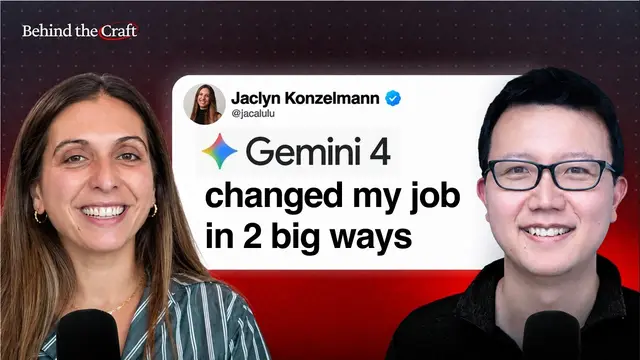
Google Labs (US): Jaclyn Konzelmann says the question used to be 'can we build it?' and is now 'should it exist?'. Instead of a 40-page Product requirements document A long document that lists everything a product must do before anyone builds it. Many teams now replace it with a short strategy and a quick prototype., her team starts with three things: a short strategy doc on what and why, a presentation to test the idea on colleagues, and a Prototype A quick, rough working version of a product made to test whether an idea works and whether people want it. to see if people get excited (Peter Yang's interview).
Lesson: when agents can copy a simple product over a weekend, the code is not what lasts. Konzelmann's team looks for new model abilities and new habits people are forming, then builds products, not features.
Why it matters: Agents are moving from trials to real headcount-sized work, and planning is changing with them. A short strategy, a demo and a prototype now beat a long spec for testing an idea fast.
AI agents now create over 20,000 Tencent Cloud TDSQL-C databases a day · PandailyRead ↗
How Google Labs decides what to build (with Jaclyn Konzelmann) · Peter YangWatch ↗
Was this useful?Tap to vote. Hold, right-click or press Shift+Enter to add a reason or a note first.
Southeast Asia
28 Oct
JurisTech and TBN announce their Thailand partnership
Southeast Asia
Malaysia's JurisTech brings its AI lending software to Thailand
Kuala Lumpur-based JurisTech has teamed up with TBN, a company listed in Thailand, to sell AI-powered lending software to Thailand's Non-bank lender A company that lends money to people or businesses but is not a bank, such as a finance or leasing company., the firms that lend to people and small businesses outside the big banks.
Key learnings
The deal, announced on 28 October, covers the whole loan journey: signing up customers, checking whether they can repay, managing loans, and collecting and recovering money (Digital News Asia).
AI does the slow paperwork, like reading documents and scoring risk, so lenders can decide faster. The companies stress human oversight: people still make the lending decisions.
Non-bank lenders often serve borrowers with little credit history, which is where faster, data-driven checks can help most. JurisTech's CEO See Wai Hun and TBN's CEO Panayu Sirikrachangsri both framed it as the start of a longer partnership.
It is an early-stage deal, so there are no results to show yet. It is one more example of a Malaysian AI software firm growing by selling into a neighbouring market.
Why it matters: Malaysian AI companies are starting to export practical tools, not just use them at home. Lending is a good test because better checks can mean fairer access to loans for small businesses.
Malaysia's JurisTech partners Thai-listed TBN to target Thailand's non-bank lending market · Digital News AsiaRead ↗
Was this useful?Tap to vote. Hold, right-click or press Shift+Enter to add a reason or a note first.
AI safety
RM20,300
bug bounty OpenAI paid (US$5,000)
Merged from 3 sources
AI safety
A ChatGPT bug let one shared link steal account data
Security researchers showed how a single shared ChatGPT link could have taken over a signed-in user's account. OpenAI has fixed it. Separately, Anthropic reportedly told Claude not to copy other people's games.
Key learnings
Parameter Labs found a chain of small gaps in ChatGPT's HTML previews. A math-input tool inside the preview could be tricked into running outside code, so opening a booby-trapped shared link could leak a signed-in user's private data (Data exfiltration Secretly copying private data out of a system to somewhere an attacker controls.). Nothing needs doing now, because the gap is closed (Parameter Labs, via Simon Willison).
OpenAI paid a US$5,000 Bug bounty A reward a company pays to outside researchers who find and privately report security holes in its products., about RM20,300, which Simon Willison called low for a full account takeover.
Claude Code: according to QbitAI, Anthropic staff confirmed two sentences were added to the Opus 5.5 System prompt Hidden instructions an AI company gives its model before every conversation, setting its rules and behaviour. so Claude steers away from recreating someone else's specific game. It follows a wave of AI-made game clones and Reverse engineering Taking apart a finished product, like an app or game, to work out how it was made so it can be copied or changed. since Opus 5.5 came out in September.
Lesson: AI tools are now powerful enough that the risks are less about the chatbot saying something wrong and more about what it can be tricked into doing, or helped to copy.
Why it matters: As AI apps run more code for you, one bad link can matter more. Companies are fixing these gaps with bounties and also with quiet rules inside their models.
Claude Code told not to recreate other people's games (Chinese) · QbitAIRead ↗
Was this useful?Tap to vote. Hold, right-click or press Shift+Enter to add a reason or a note first.
AI in China
175 trillion
AI tokens used per day in China (June 2026)
Merged from 3 sources
AI in China
China now uses AI more than it trains it, report says
A Chinese government research centre says AI use in China has passed a turning point: more computing now goes to answering people than to training new models. Alibaba's AI glasses and a top AI founder added to the picture.
Key learnings
CCID's report says Inference The work an AI model does when it answers a question or completes a task, as opposed to training, when it learns., the work an AI does when it answers you, has passed training for the first time. China used more than 175 trillion Token A small chunk of text, roughly part of a word, that AI models read and write. AI usage and pricing are counted in tokens. a day as of June 2026, over 1,000 times early 2024 (IThome).
The same report counts more than 500 advanced smart factories and over 700 million generative AI users, more than half the population.
Alibaba's Qwen AI glasses got a free update that translates phone calls and videos as you watch or listen (IThome).
Tang Jie, founder of Z.ai (Zhipu), told the SCMP that Recursive self-improvement When an AI helps design or train better versions of itself, so each round can improve faster than the last., AI that helps improve itself, is a key step toward human-level AI, and that doing it safely is the main challenge.
Why it matters: When most AI computing goes to daily use rather than training, the race shifts to cheap, fast everyday answers. China's huge user base is making that shift first.
 AI and the web