1Highlight: Google opens SynthID Detector worldwide, so anyone can check if an image, video or audio clip carries a hidden AI label.
2How companies use AI: Circle K's AI agent cut incident checks from 45-60 minutes to under 15, and every Mercari employee now uses AI.
3Also: ChatGPT and Codex share one allowance from December, Anthropic's big sales and losses, robots climb Mount Tai, and Google funds Negeri Sembilan water.
Highlight of the day
Spotting AI fakes
180 billion+
images and videos already watermarked by SynthID
Merged from 2 sources
★ Highlight of the day
Google opens its AI-made photo and video checker to everyone
Google has opened Watermark A hidden mark inside a picture, video or sound that shows it was made by AI. Google's version is called SynthID. Detector to people around the world, in English. You upload an image, video or audio clip, and it tells you if it carries a hidden AI label from Google or its partners.
What we learned
How it works: Google and partners hide an invisible watermark inside AI-made files. Google says it has marked more than 180 billion images and videos and 240,000 years of audio this way (Google's October recap).
It now also checks files made with tools from OpenAI, NVIDIA and Kakao, with Apple support expected soon. Before, the Gemini app could only check content made by Google's own AI (InfoQ).
It is not a general AI detector A tool that tries to tell whether a text, image, video or sound was made by AI. None of them are always right.. It cannot spot files from Meta or Microsoft, which use different watermarks, and heavy editing can weaken the mark. A 'no clear signal' answer does not prove a file is real.
Critics on Reddit say a light clean-up of an image can strip the mark. Another approach, C2PA An industry standard that attaches a record of where a photo or video came from and how it was edited, so people can check if it is genuine., saves a file's history as Metadata Extra information saved inside a file, such as when it was made, by which device or app, and how it was changed., but that is lost in screenshots and many uploads.
Also from Google: Android's AI scam detection already flags more than 5 million suspected scam calls and texts a month. A new opt-in Enhanced protection mode in Google Messages uses Private AI Compute Google's way of running powerful AI in its cloud while keeping your data sealed off so that even Google says it cannot see it. and Gemini to catch scams that unfold over a chat.
Why it matters: Fake photos, voices and videos are a common scam tool. A quick check helps, but a clean result is not proof, so keep checking where a file came from.
The latest AI news we announced in October 2026 · GoogleRead ↗
SynthID Detector launches worldwide, checks content from OpenAI, NVIDIA and Kakao (Chinese) · InfoQ ChinaRead ↗
Was this useful?Tap to vote. Hold, right-click or press Shift+Enter to add a reason or a note first.
More stories today
How companies use AI
Under 15 min
Circle K's average incident triage time, down from 45-60 min
Merged from 2 sources
How companies use AI
Circle K and Mercari share measured results from using AI
A global convenience store chain cut the time its engineers spend working out what broke. A Japanese marketplace got every employee using AI, then learned that tools alone were not enough.
Key learnings
Circle K (convenience and fuel stores, 17,200+ stores in 27 countries): when an alert fired, an On-call engineer The engineer whose turn it is to respond, day or night, when a company's systems break or raise an alert. spent 45 to 60 minutes pulling logs and checking systems before any fix could start. An AI agent An AI program that takes actions for you, like writing code, paying a bill or changing a menu, not just answering questions. built on Amazon Bedrock An Amazon Web Services product that lets companies use many different AI models, and build AI agents, through one service. now does that checking and posts a short summary in Slack within minutes.
Result: average Incident triage The first step after something breaks: working out what went wrong, how serious it is and who should fix it. time fell to under 15 minutes, a 67 to 75% cut, based on the DevOps The team and way of working that keeps a company's software running and gets updates out quickly and safely. team's own incident-response numbers (AWS blog, co-written with Circle K engineer Marek Klatowicz).
Mercari (online marketplace, Japan, about 2,000 staff): by the end of January, 100% of employees used AI tools like ChatGPT and Claude. Its earnings deck says output per engineer is 7.6 times what it was in the year to June 2024 (ITmedia).
But faster coding alone did not lift business results, says Chief AI officer A senior company leader in charge of how the whole organisation uses AI. Toshiya Kimura. Mercari now builds AI agents for each stage of work, from planning to checks. Some managers blocked staff from spending time on agents, so Kimura told everyone every two weeks that this time was not wasted.
Lesson: AI pays off when it takes over a whole repeated job, like Circle K's checks, and when bosses make time for people to build it.
Why it matters: Both firms measured real time saved, not just how many people log in. Handing AI one boring, repeated task end to end is often where the gain shows up.
How Circle K accelerated DevOps incident triage to under 15 minutes with Amazon Bedrock · AWS Machine Learning BlogRead ↗
Who builds an AI-first organisation? Mercari's practice (Japanese) · ITmedia BusinessRead ↗
Was this useful?Tap to vote. Hold, right-click or press Shift+Enter to add a reason or a note first.
AI subscriptions
December
when ChatGPT and Codex start sharing one allowance
Merged from 2 sources
AI subscriptions
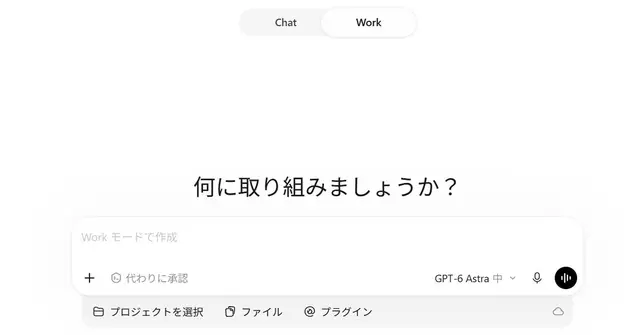
ChatGPT and Codex will share one usage allowance from December
OpenAI is folding ChatGPT Work's agent features into the main ChatGPT app. In December, ChatGPT and Codex OpenAI's AI coding helper, which can write, fix and test software for you., its coding helper, will draw from one shared usage allowance.
Key learnings
OpenAI announced this on 1 November. It says most people should not have to wait for their allowance to reset more often than now. Quick 'Instant' answers use none of it (ITmedia).
How much you use depends on the model and the task. You can see what is left, and when it resets, under Settings, then Usage.
On 29 October, OpenAI also doubled usage on its Pro 100, Pro 200, Pro 500 and Business Premium plans, and dropped a planned cut to Pro 200. Some Pro 200 users said calling that a 'doubling' was misleading, and Plus users got no increase (InfoQ).
Hidden background work can eat allowances too. One developer measured Claude Code's status summaries at 16.4% of a week's estimated cost. Anthropic says the average is about 2%, and fixed the costliest case in version 2.1.311.
Why it matters: If you pay for ChatGPT, chat and coding will soon come out of the same pot. Check the Usage page before a big job so you are not cut off halfway.
ChatGPT to merge Chat and Work; usage limits shared with Codex (Japanese) · ITmedia AI+Read ↗
OpenAI doubles Pro limits; background agents quietly use tokens (Chinese) · InfoQ ChinaRead ↗
Was this useful?Tap to vote. Hold, right-click or press Shift+Enter to add a reason or a note first.
AI money
RM69 billion
Anthropic's sales in July to September (about US$17 billion)
Merged from 4 sources
AI money
Anthropic's sales are 12 times last year's, but it still loses money
Anthropic, the maker of Claude, shared its July to September numbers ahead of its stock market listing. Sales soared, losses stayed huge, and China's Kling AI video unit closed a giant funding round.
Key learnings
Anthropic made about US$17 billion (about RM69 billion) in sales in the quarter, up about 1,127% from a year earlier. Growth is slowing, though: 47% over the previous quarter, down from 144% the quarter before (CNBC).
Its Net loss What a company loses over a period after every cost, tax and accounting charge is taken off its income. was US$23.3 billion (about RM95 billion). Most of that is an accounting charge tied to its rising value, not cash spent. Its Operating loss What a company loses from running its everyday business, before interest, taxes and one-off accounting items., from actually running the business, was US$567 million (about RM2.3 billion) (Reuters, CNBC).
It has promised to spend about US$895 billion (about RM3.6 trillion) on computing and Data centre A large building full of computers that store data and run online services and AI, and that uses a lot of power and water.. Some investors value the company at about US$1.5 trillion (about RM6.1 trillion), Reuters reports.
In China, Kuaishou's Kling AI video unit completed RMB19.8 billion (about RM12.1 billion) in funding. Investors can ask for their money back, plus 8% a year, if Kling has not listed by October 2031 (TechNode Global).
Why it matters: AI tools are selling fast, but building them still costs more than they earn. That is why prices, plans and Rate limit A cap on how many requests or messages you can send to an AI service in a set amount of time. keep changing for users.
Kuaishou's Kling AI completes $2.9B financing · TechNode GlobalRead ↗
Was this useful?Tap to vote. Hold, right-click or press Shift+Enter to add a reason or a note first.
Robots
43 min 41 s
winning robot dog time up Mount Tai; most tourists take 2+ hours
Merged from 4 sources
Robots
Robots race up China's Mount Tai carrying eggs and watermelons
About 90 teams sent robots up more than 3,000 stone steps on one of China's most famous mountains. Robot dog A robot that walks on four legs like a dog, often used to carry loads or inspect places that are hard to reach. did well. Some Humanoid robot A robot built roughly in the shape of a person, with arms, a torso and often legs. fell, overheated or had to be carried down.
Key learnings
The course was 3.9 km long and climbed more than 600 metres. Robots either raced to the top or carried fragile goods like fresh eggs and watermelons (AFP, via Malay Mail).
A robot dog from Unitree's Beijing Lingyi team won the four-legged race in 43 minutes 41 seconds, including a 2-minute penalty, running on its own. Most tourists take at least two hours (MyDrivers, CCTV).
The fastest humanoid finished a shorter course in 27 minutes 26 seconds. One humanoid overheated halfway and was carried off on a stretcher, and another was led up on a rope.
Also: AGIBOT says 110 of its humanoid robots performed in sync and set a Guinness World Record. Unitree's July to September sales rose 70% to 665 million yuan (about RM405 million), but profit fell 17% as research spending jumped.
Why it matters: Stairs, slopes and heat are where robots still struggle. Races like this show what works outside the lab, and robot dogs are ahead of humanoids for now.
Robots race up China's sacred Mount Tai carrying eggs and watermelons · Malay MailRead ↗
Unitree robot dogs win 1 gold and 2 silvers on Mount Tai (Chinese) · MyDriversRead ↗
110 humanoid robots. One synchronized performance. A GUINNESS WORLD RECORDS. · AGIBOTWatch ↗
Unitree Q3 revenue 665 million yuan, up 70% (Chinese) · MyDriversRead ↗
Was this useful?Tap to vote. Hold, right-click or press Shift+Enter to add a reason or a note first.
Southeast Asia
65 million litres
of treated water a day from the new Negeri Sembilan plant
Merged from 3 sources
Southeast Asia
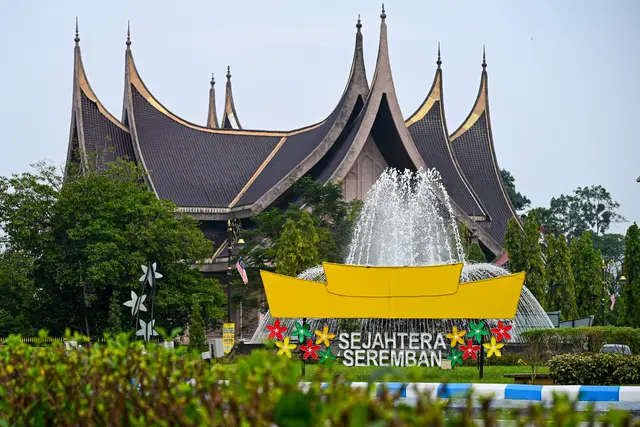
Google pays RM650 million for Negeri Sembilan water near its data centre
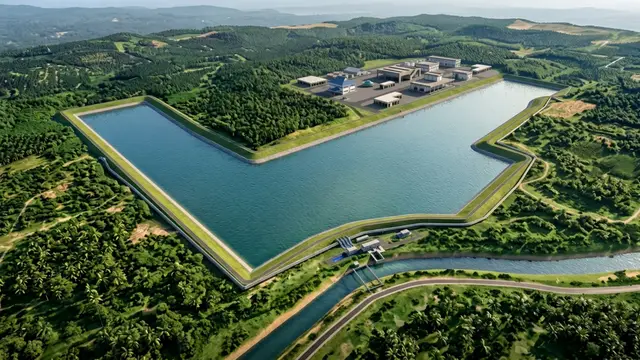
Google will fund a reservoir and a water treatment plant in Negeri Sembilan. They will serve its planned Data centre A large building full of computers that store data and run online services and AI, and that uses a lot of power and water. in Port Dickson and also add to the state's public water supply.
Key learnings
Google is putting in US$160 million (about RM650 million). Gamuda will build the plant, which can treat 65 million litres a day. The state body MBINS will own both facilities (Lowyat.net, The Sun).
The reservoir sits by the Linggi River. It stores extra river water and rain in wet seasons, which also helps reduce flooding, and supplies the plant in dry spells.
Gamuda said in January 2025 that 25% of the plant's capacity would go to homes and 75% to data centre use (The Sun). Google says it will also pay for all the electricity its campus uses and its grid connection.
Regionally, the Quad (Australia, India, Japan and the US) plans more than US$85 million (about RM345 million) in help to spread trusted AI across the Indo-Pacific. It has not said who gets it or when (TechNode Global).
Why it matters: AI data centres need huge amounts of water and power. Who pays for it, and whether locals benefit too, matters for every Malaysian state hosting one.
 Spotting AI fakes